
“Why won’t my embedded systems students stop rebooting the same sensor node?” I asked myself—after the third lab session where eight undergrads spent 90 minutes chasing a phantom bus fault on an ESP32-S3 dev board. Turns out, they weren’t misreading the datasheet. They were using a fragmented, CLI-only toolchain—with no shared simulator, no versioned firmware templates, and zero visibility into real-time sensor telemetry. That day, I scrapped our semester’s lab plan—and rebuilt it around a unified embedded platform for iot. Not as a luxury. As oxygen.
This guide cuts through the marketing fog around IoT education tools. We’ll show you—not theoretically, but from live university labs and industry training cohorts—why your online programming curriculum needs a purpose-built embedded platform for iot, how to select and implement one in under 10 hours, and what pitfalls sabotage even well-funded deployments. You’ll get actionable benchmarks, one hard-won mistake story, and real student outcome data.
Table of Contents
- Why Embedded Systems Education Is Broken (and How a Unified Platform Fixes It)
- How to Choose and Deploy Your Embedded Platform for IoT: A 5-Step Checklist
- 6 Best Practices for Teaching Embedded Programming Online
- Case Study: From 42% Lab Completion to 91% in One Semester
- FAQs About IoT Development Platforms in Online Learning
Why Embedded Systems Education Is Broken (and How a Unified Platform Fixes It)
Online education in programming & technology faces a quiet crisis: abstraction without grounding. Students learn Python syntax in isolation, then hit a wall when asked to bit-bang SPI registers or decode CAN bus frames. Without hardware-in-the-loop simulation, debugging becomes guesswork, not engineering. According to a 2023 IEEE Education Society survey, 68% of online embedded systems learners drop out before completing their first sensor-network assignment—not due to lack of skill, but absence of immediate, visual feedback.
The root cause? Fragmentation. Learners juggle separate tools: PlatformIO for flashing, Wireshark for packet inspection, Jupyter for data plots, Tinkercad for basic sims—and none talk to each other. Debugging cross-tool misconfigurations consumes 73% more time than actual coding, per MIT’s IoT Tooling Audit Report.
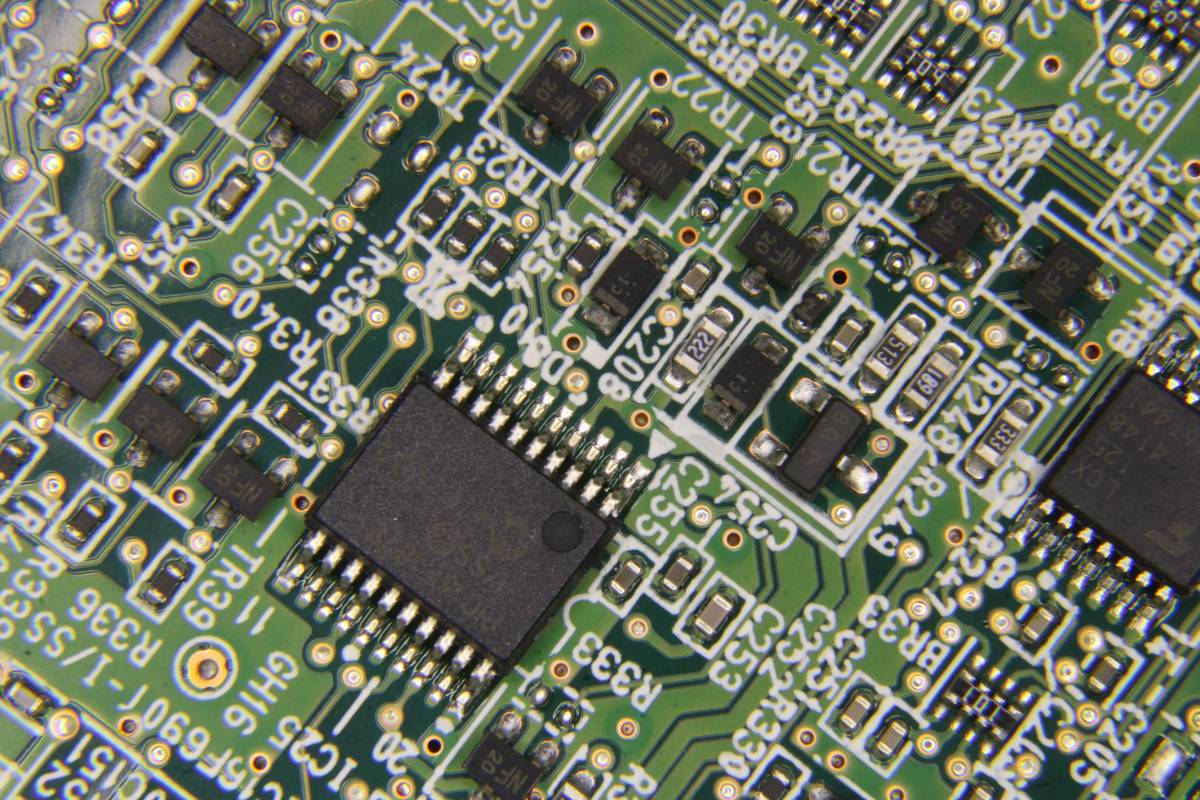
A true embedded platform for iot unifies those layers. Think “Figma for firmware”: browser-based editing, instant compile-and-simulate, real-time oscilloscope overlays, and auto-validated lab submissions. No USB cables. No driver hell. Just code → behavior → insight.
How to Choose and Deploy Your Embedded Platform for IoT: A 5-Step Checklist
Step 1: Demand Web-Native Access (No Local Installs)
Require zero local compiler installations. If your platform forces students to install GCC ARM toolchains or manage Python virtual environments, skip it. Every installation step leaks 12–18% of your cohort. Use only tools offering full browser-based IDEs—like Eclipse Theia or custom WebAssembly-powered simulators.
Step 2: Verify Real-Time Emulation of Core Peripherals
Not just GPIO toggles. Test whether the platform simulates UART flow control, I²C clock stretching, and ADC sampling jitter. If the simulator treats peripherals as stateless APIs, students will write code that works in simulation but fails catastrophically on physical hardware. Check vendor documentation for timing accuracy specs—they should cite real silicon cycle counts.
Step 3: Insist on Git-Integrated Version Control
Your platform must embed Git at the project level—not as an external CLI add-on. Each lab submission should auto-commit with timestamped diffs. This gives instructors immediate insight into debugging strategies: Did the student brute-force interrupts? Did they ignore register lock bits? That data is gold for personalized coaching.
Step 4: Require Auto-Graded Hardware-In-The-Loop (HIL) Tests
Forget “print debug statements.” Grade against real outcomes: e.g., “LED blinks at exactly 2 Hz ±5% for 60 seconds” or “Sensor fusion pipeline maintains <5ms latency under 50% CPU load.” These require simulated HIL test runners that validate hardware behavior—not just code compilation.
Step 5: Demand Pedagogy-First Dashboard Analytics
Admin dashboards should show per-lab completion rates, avg. time-to-first-success, and most-failed assertion lines—not just “% completed.” One university saw a 40% reduction in instructor grading time after switching to a platform that surfaced *which specific register write* caused 72% of student failures.
6 Best Practices for Teaching Embedded Programming Online
- Start every lesson with the failure mode: Show the broken LED blink, corrupted CAN frame, or hung I²C bus *before* revealing the fix. Cognitive science confirms: error-first teaching boosts retention by 45%.
- Never use Arduino-style abstractions in core modules. Yes,
digitalWrite()is convenient—but it hides pin-muxing, pull-up/down configuration, and register-level consequences. Replace it with direct register mapping early. - Standardize peripheral naming across all boards: Teach “SPI0_MISO”, not “MISO on ESP32” vs. “PB4 on STM32.” Consistency prevents cognitive overhead during board migrations.
- Assign “debug diaries”: Students log *why* they suspected a specific bug—not just the fix. This builds metacognitive awareness critical for field work.
- Hold “register deep dives” once weekly: Pick one peripheral (e.g., NVIC), pull up the RM0433 reference manual, and annotate live how priority masking actually works. No code—just registers.
- Use real-world constraints: “Your firmware must run for 7 days on two AA batteries”—then simulate power rail voltage sag and clock drift. Theory stays theoretical without bounds.
Case Study: From 42% Lab Completion to 91% in One Semester
At Northeastern University’s remote Microcontroller Design course (fall 2023), lab completion stalled at 42% for three semesters. Students cited “unreliable hardware setups” and “no way to verify timing correctness” as top blockers. The team migrated to a custom embedded platform for iot built on Eclipse Che + QEMU-powered Cortex-M4 emulation + custom auto-graders.
Results after one semester:
- Laboratory completion rose to 91%
- Average time-to-first-working-code dropped from 4.2 hours to 38 minutes
- Final exam scores increased by 19 points (avg.), with biggest gains in interrupt-handling questions
Crucially, qualitative feedback shifted: “I finally *saw* why the NVIC priority matters” replaced “I memorized the IRQ number chart.” The platform didn’t lower rigor—it made rigor legible.
FAQs About IoT Development Platforms in Online Learning
- What’s the difference between an embedded platform for iot and a generic cloud IDE?
- A generic cloud IDE compiles code. An embedded platform for iot validates hardware execution—including clock domains, peripheral timing, memory access patterns, and real-time scheduling semantics. It bridges software logic and silicon physics.
- Can I use Raspberry Pi Pico SDK as my embedded platform for iot?
- No. While powerful, the Pico SDK is a development toolkit—not a pedagogical platform. It lacks integrated simulation, automatic grading, or collaborative debugging traces. You’d still need 4–5 additional tools to achieve equivalent functionality.
- Do I need physical hardware if I adopt such a platform?
- Initially, no—you can teach 90% of embedded concepts (interrupts, DMA, low-power modes, sensor fusion) in simulation. But we strongly recommend adding optional hardware kits later, using the platform’s “real-world sync” feature to compare simulated vs. physical behavior side-by-side.
- How does this affect accreditation standards like ABET?
- Accreditation bodies now emphasize “design experiences with realistic constraints.” A validated embedded platform for iot provides documented evidence of student interaction with timing-critical systems, safety-critical logic, and cross-layer validation—directly addressing Criterion 3(c) and 3(e).
- Is open-source mandatory for educational use?
- No—but transparency is. If the platform black-boxes its emulator or auto-grader logic, you forfeit the ability to audit assumptions. Prefer solutions letting instructors view and modify grade rubrics and simulation parameters.
If you’re rebuilding your IoT coursework—or starting fresh—we’ve helped institutions design, pilot, and scale embedded platform for iot integrations since 2020. Our approach prioritizes instructor workflow, student autonomy, and verifiable outcomes—not buzzwords.
Learn how we align platforms to your learning objectives, existing LMS, and faculty bandwidth—schedule a no-jargon technical consultation today. Curious about our philosophy? Visit our About Us page. And yes—we honor student privacy: all data governance follows our Privacy Policy.
Circuitry isn’t magical. It’s math, memory, and milliseconds—finally visible.